COMPUTER SCIENCE AND ENGINEERING




The Computer Science and Engineering (CSE) Department at SIMATS Engineering is a leading and vibrant department renowned for its expert faculty and strong industry partnerships with companies like Cisco, HCL, Oracle, and EC-Council. Our students engage in innovative projects through the QUADPRO Studio’s Devise, Design, Develop, Deploy framework, ensuring they develop skills that meet industry standards. With over 3,900 SCOPUS-indexed publications and initiatives such as the STAR Summit, we emphasize undergraduate research and holistic development. Our comprehensive training programs and active participation in conferences, hackathons, and extracurricular activities prepare our graduates to excel in their careers and become well-rounded professionals.
VISION AND MISSION OF OUR DEPARTMENT
VISION
To foster academic excellence and research-oriented qualities in Computer Science engineering graduates, enabling them to adapt to emerging technologies meeting global standards.
MISSION
M1: To create and sustain an academic environment to the higher level by enhancing the knowledge of the students in technological advancements to solve real time problems.
M2: Providing a suitable environment for the students to develop professionalism with the knowledge in computer science & Engineering to meet the contemporary industry needs and satisfy global standards.
M3: To facilitate the development of research aptitude and stronger ethical values so as to work with commitment for the progress of the nation and face challenges with ethical and social responsibilities.


Program Educational Objectives
PEO 1: Graduates will showcase expertise in interpreting, analyzing, designing, and implementing solutions to a variety of real-world challenges within the realm of Computer Science and Engineering.
PEO 2: Graduates will use their research skills in Computer Science and Engineering to analyze complex challenges systematically and publish solutions when needed.
PEO 3: Graduates will adeptly identify deficiencies or gaps in real-world services and proficiently devise, create, and implement entrepreneurial solutions to effectively address the identified shortcomings.
PEO 4: Graduates will demonstrate the application of their acquired knowledge during training, displaying competence in various competitive exams for career development.

Program Specific Outcomes (PSO)
PSO1: Apply comprehensive knowledge in the areas of Network Security, Machine Learning, Artificial Intelligence, and Cloud Computing to analyze and solve real-world problems.
PSO2: Design and develop interactive web and mobile applications, including hardware–software integrated projects, to address real-time problems using appropriate tools and technologies.
Program Outcomes
PO1: Engineering Knowledge: Apply knowledge of mathematics, natural science, computing, engineering fundamentals, and an engineering specialization as specified in WK1 to WK4 respectively to develop solutions to complex engineering problems.
PO2: Problem Analysis: Identify, formulate, review research literature, and analyze complex engineering problems, reaching substantiated conclusions with consideration for sustainable development. (WK1 to WK4)
PO3: Design/Development of Solutions: Design creative solutions for complex engineering problems and design/develop systems, components, or processes to meet identified needs with consideration for public health and safety, whole-life cost, net zero carbon, culture, society, and the environment, as required. (WK5)
PO4: Conduct Investigations of Complex Problems: Conduct investigations of complex engineering problems using research-based knowledge, including the design of experiments, modelling, analysis, and interpretation of data to provide valid conclusions. (WK8)
PO5: Engineering Tool Usage: Create, select, and apply appropriate techniques, resources, and modern engineering and IT tools, including prediction and modelling, while recognizing their limitations to solve complex engineering problems. (WK2 and WK6)
PO6: The Engineer and The World: Analyze and evaluate societal and environmental aspects while solving complex engineering problems for their impact on sustainability with reference to economy, health, safety, legal framework, culture, and the environment. (WK1, WK5, and WK7)
PO7: Ethics: Apply ethical principles and commit to professional ethics, human values, diversity and inclusion, and adhere to national and international laws. (WK9)
PO8: Individual and Collaborative Team Work: Function effectively as an individual and as a member or leader in diverse and multidisciplinary teams.
PO9: Communication: Communicate effectively and inclusively within the engineering community and society at large, including the ability to comprehend and write effective reports and design documentation, and make effective presentations considering cultural, language, and learning differences.
PO10: Project Management and Finance: Apply knowledge and understanding of engineering management principles and economic decision-making to one's own work, as a member and leader in a team, and to manage projects in multidisciplinary environments.
PO11: Life-Long Learning: Recognize the need for, and have the preparation and ability for i) Independent and life-long learning ii) Adaptability to new and emerging technologies iii) Critical thinking in the broadest context of technological change. (WK8)
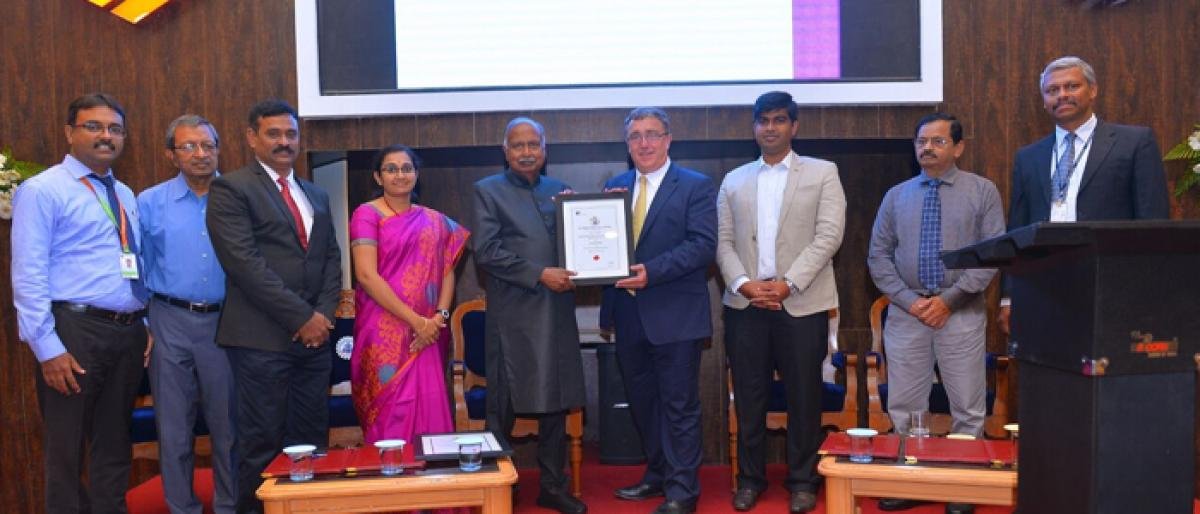
The Department of Computer Science and Engineering program is accredited by NBA Tier-I, ABET, and IET (UK). These accreditations demonstrate that the program meets international quality standards, and the NBA Tier-I and IET (UK) accreditations are recognized under the Washington Accord, providing global recognition for the program and its graduates.